How roots receive water and air
In Kratky hydroponics, a plant is held above a still nutrient solution. As water is used, the level drops. Some roots remain in solution while others develop in the humid air above it. A pump is not needed to create that air space.
The lid supports the pot and limits light entering the reservoir. The method needs a solution volume suited to the crop and cycle length. Without a pump, you still need inspections for leaks, overheating, young roots drying out and solution running out early.
Prepare the container and plant support
Use a stable opaque container suitable for water contact and edible growing. Its lid must support the mature plant and pot. Leave a way to inspect the level without lifting the whole plant out.
Choose a short first crop, such as lettuce, and size the reservoir using your chosen Kratky plan. One container size will not fit every crop: larger canopies and longer cycles use more water. Avoid starting in a cramped jar if you do not know whether it will last until harvest.
Set the starting water level
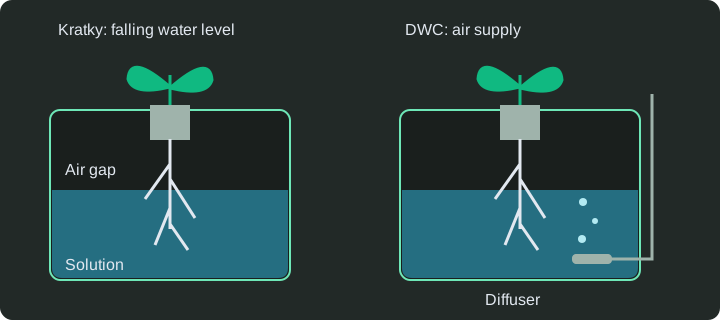
At planting, a young root or the bottom of the plug must receive moisture. Keep leaves and the base of the stem above the solution. If roots do not reach yet, provide moisture through the seedling medium as the design allows while retaining air access.
Prepare complete nutrients for the crop and stage. Record starting volume, recipe, pH and EC. The planting level differs from the mature level: the air gap develops as the crop grows.
Why refilling to the lid can harm roots
Once roots have developed above the solution, filling the tank to its original level can submerge the aerial root zone. DWC top-up instructions therefore need adapting for Kratky. Choose a plan that describes allowable refilling for your container and crop before starting.
If solution runs out early, record the actual use and check for leaks, excessive plant size and heat. Preserve the air gap during any refill allowed by your plan. Review tank size or plant count for the next crop.
Choosing between Kratky and DWC
| Question | Kratky | DWC |
|---|---|---|
| How oxygen reaches roots | Air gap above the solution | Air supplied to the solution |
| Air pump required | Not required by this method | Required for an aerated system |
| Water-level care | Preserve the established air gap | Maintain the working level for the design |
| First checks for wilting | Root access to solution, level and temperature | Level, temperature and actual aeration |
Both methods need lighting, plant support and complete nutrition. Choose based on your ability to inspect and maintain the reservoir as well as the number of components.
Record what happened during the first crop
Keep a record of cultivar, plant count, container volume, remaining solution and light conditions. Note any refill and the level you maintained. These observations are more useful than a promise that a passive system always runs without intervention.
Clean the reservoir and pots after harvest. Start the next crop with a fresh known solution. For a crop with repeated harvests, plan ahead for solution renewal and a larger mass of roots.