What a DWC system contains
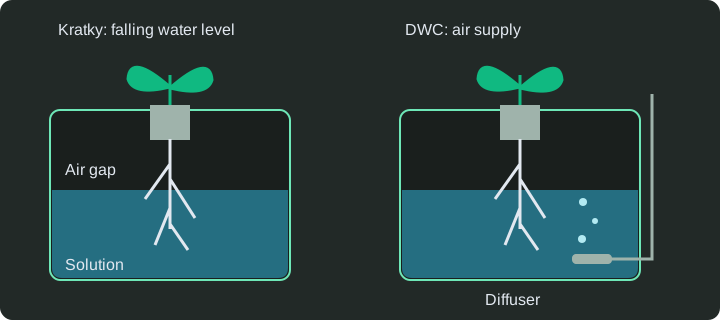
In deep water culture, roots grow in a nutrient reservoir supplied with air. A simple setup needs an opaque tank, a lid supporting a pot, seedlings, complete fertilizer, an air pump, tubing and a diffuser. Indoor growing also needs suitable lighting.
Choose equipment for the working volume and design. Pump output alone does not describe how air is distributed between diffusers. If you use a kit, start with its connection instructions and allowed plant count.
Assemble and test without plants
Place the reservoir on a level, stable surface. Check that the lid can support a mature plant. Connect the air line and backflow protection as the pump instructions require. Keep electrical connections away from possible spills.
Fill with clean water and start aeration. Confirm that air reaches the water, tubing is open and connections do not leak. Check lid access and maintenance space: a full heavy tank is awkward to move after planting.
Transplant and mark the working level
Prepare nutrients for the crop and stage. Measure source water first, add components as instructed, check EC and then adjust pH. Record the actual volume.
Secure the plug without pinching the stem. A young root or the bottom of the plug must reach moisture. Keep the stem base and leaves above water. As roots develop, maintain the level required by the design; filling to the lid is not a universal DWC rule.
Daily reservoir checks
- Check that air actually reaches the solution.
- Check the water level and look for leaks.
- Measure solution temperature and inspect roots.
- Record pH and EC under known measuring conditions.
- Check new growth, lighting and water use.
Consumption changes with plant size and climate. If the reservoir empties faster, check for leaks and heat before changing fertilizer doses. Shield unused holes from light while keeping the air access and inspection opening required by the design.
Top-ups and solution replacement
For a system using routine top-ups, restore the known working volume with suitable water, mix and recheck EC. Use the final reading and recipe history to decide whether nutrients are needed. Comparing before and after a refill helps separate concentration from water loss.
Follow the crop-specific renewal plan. After repeated unknown additions, contamination or a lost recipe, prepare fresh solution. Keep roots moist during replacement and avoid pulling them from the pot. Record source water and doses for the new batch.
When the air pump stops
Check power safely, connections, tubing and the diffuser. Do not handle wet electrical connections. Identify why air delivery stopped and restore it with suitable working equipment.
How long plants can tolerate lost aeration depends on temperature, root mass, volume and solution condition, so there is no universal safe number of hours. If plants wilt, check water and roots as well. After restoring airflow, watch new growth and review maintenance if the diffuser repeatedly clogs.